Integrated Design and Construction Services: A Smarter Way to Build
What Are Integrated Design and Construction Services?
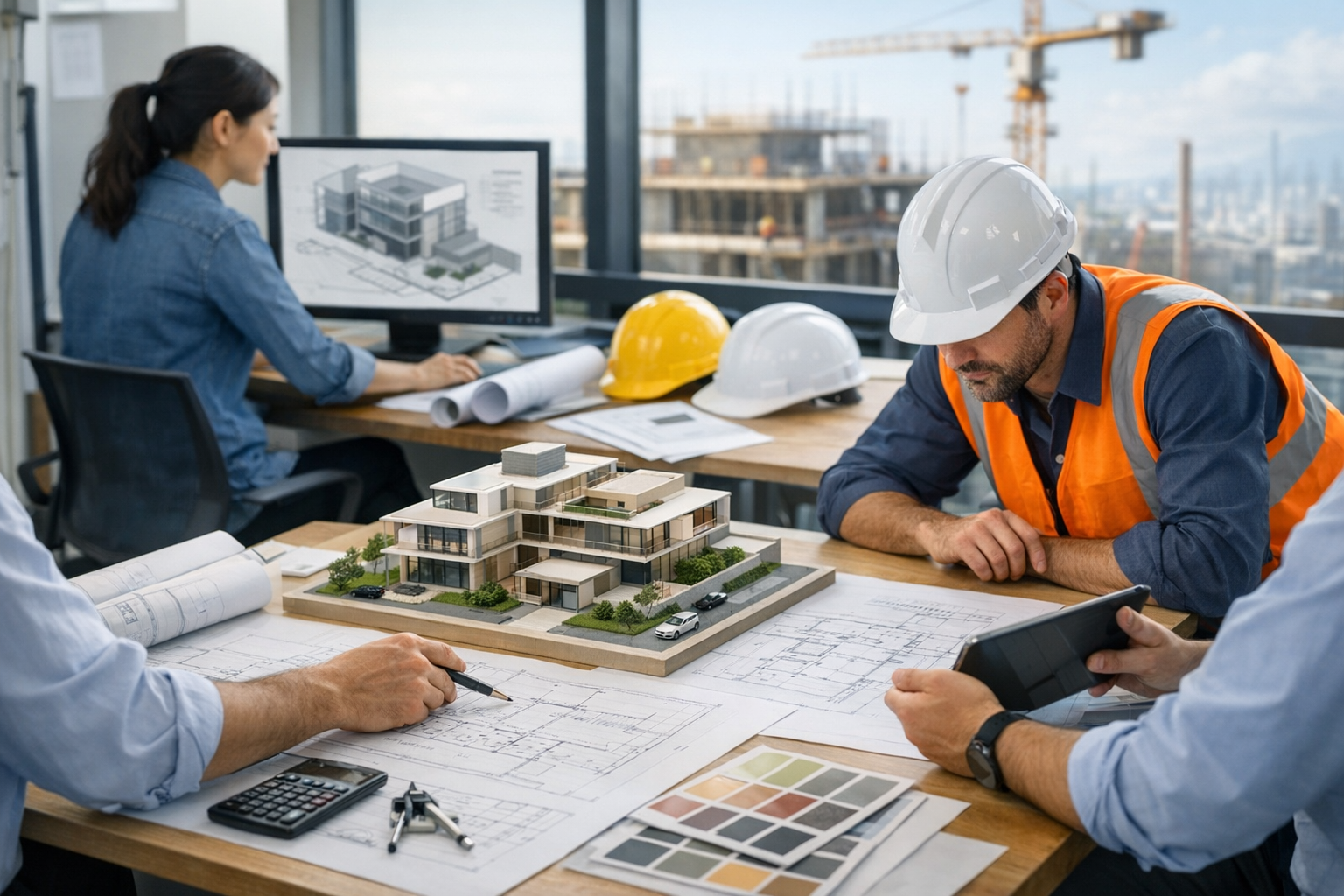
Integrated design and construction services bring the planning, design, and building phases of a project together under one coordinated process. Instead of hiring separate teams that work in silos, property owners partner with a single, aligned team that collaborates from the earliest concept through project completion. This approach is often called design-build or integrated project delivery, and it is becoming increasingly popular for commercial, industrial, and residential projects.
At its core, integration means better communication, faster decision-making, and fewer costly surprises. Architects, engineers, contractors, and specialists work together from the beginning, helping ensure that design ideas are practical, budget-conscious, and buildable. The result is a streamlined experience for the client and a more efficient path to completion.
How the Integrated Process Works
Traditional construction projects often follow a linear path: the design is completed first, then it is handed off to a contractor for construction. In an integrated model, those stages overlap. The team collaborates early to define goals, identify risks, establish budgets, and evaluate materials or systems that best fit the project.
During preconstruction, the team may review site conditions, develop preliminary drawings, and estimate costs in real time. As the design evolves, construction expertise helps confirm that the project remains feasible and aligned with the owner’s priorities. Once construction begins, the same team that shaped the design is already familiar with the details, which helps reduce delays and misunderstandings.
This continuous collaboration creates a more cohesive workflow from concept to closeout. Because everyone is working toward the same outcome, changes can be addressed faster and with less disruption.
Key Benefits of Integrated Design and Construction Services
1. Improved Communication and Accountability
One of the biggest advantages of an integrated approach is simplified communication. Instead of managing multiple separate contracts and competing priorities, clients work with one coordinated team. This reduces the chance of miscommunication and makes it easier to track progress, resolve issues, and hold the project accountable to shared goals.
2. Faster Project Delivery
Because design and construction activities happen in tandem, the project timeline can often be shortened. Early collaboration allows construction planning to begin before the design is fully complete, which can accelerate schedules without sacrificing quality. For businesses needing to open sooner or minimize downtime, this can be a major advantage.
3. Better Cost Control
Budget overruns are a common concern in construction, especially when design decisions are made without considering buildability or market pricing. Integrated services help address this by involving construction professionals early in the process. They can provide cost feedback as the design develops, helping the owner make informed decisions before changes become expensive.
4. Higher Quality Outcomes
When design intent and construction execution are aligned, the final result is often stronger. The team can choose materials, systems, and methods that support both aesthetics and performance. This coordination can improve durability, functionality, and long-term value.
5. Reduced Risk
Integrated teams are better positioned to identify potential conflicts before they become problems. Whether it is a design issue, a permit challenge, or a site constraint, early collaboration helps surface risks sooner. That proactive approach can reduce rework, claims, and delays.
Why Businesses and Property Owners Choose This Approach
Integrated design and construction services appeal to owners who want a more predictable and efficient project experience. For commercial clients, time is often money. Faster delivery can mean earlier revenue generation, less disruption to operations, and a smoother path to occupancy. For developers, integrated services may help improve coordination across multiple moving parts, especially on complex projects.
Property owners also appreciate the convenience of working with one team rather than managing several consultants and contractors separately. This single-source structure simplifies decision-making and creates a more transparent process. Many owners find that the collaborative nature of integrated delivery gives them greater confidence in the final outcome.
In addition, this method can be especially valuable for projects with tight budgets, compressed timelines, or specialized technical requirements. When a project demands precision and flexibility, having everyone at the table from day one can make a meaningful difference.
What to Look for in an Integrated Service Provider
Not all integrated service providers offer the same level of coordination or expertise, so it is important to evaluate your options carefully. Look for a team with proven experience in both design and construction, along with a strong portfolio of completed projects similar to yours. Ask about their process for collaboration, budgeting, scheduling, and communication.
A reliable provider should be able to explain how they manage changes, maintain quality, and keep stakeholders informed. It also helps to choose a team that values transparency and has a reputation for problem-solving. Since integrated delivery depends heavily on teamwork, culture and communication style matter just as much as technical skill.
Clients should also ask how the provider handles permitting, procurement, and subcontractor coordination. The more seamless these processes are, the more benefit you are likely to gain from the integrated model.
Is Integrated Design and Construction Right for Your Project?
This approach is a strong fit for many projects, but it is especially useful when collaboration, speed, and cost certainty are top priorities. It can be a smart choice for office renovations, healthcare facilities, retail spaces, educational buildings, industrial developments, and custom residential builds. If your project requires close coordination among multiple disciplines, integrated services may help simplify the journey.
That said, the success of the model depends on choosing the right partner. A well-run integrated project should feel organized, responsive, and aligned from the start. If your goal is to reduce friction and improve outcomes, the integrated approach is worth serious consideration.
Conclusion
Integrated design and construction services offer a smarter, more collaborative way to build. By uniting planning and execution under one coordinated process, project owners can benefit from better communication, faster delivery, improved cost control, and stronger results. For anyone seeking a more efficient and predictable construction experience, integrated services can provide a clear advantage.