Millwork for Custom Home Interiors: How Built-Ins, Trim, and Details Transform a Space
Millwork for Custom Home Interiors
Millwork is one of the most effective ways to give a custom home its character, polish, and sense of permanence. From elegant crown molding to tailored cabinetry and dramatic wall paneling, millwork shapes the way a space looks and feels. It can make a room appear more refined, more functional, and more thoughtfully designed.
In custom home interiors, millwork does more than decorate. It helps define architecture, improve storage, and create a cohesive flow from room to room. Whether your style is modern, traditional, transitional, or somewhere in between, the right millwork choices can elevate the entire home.
What Is Millwork?
Millwork refers to woodwork that is manufactured in a mill and installed as part of a home’s interior finish. It includes both decorative and functional elements made from wood or wood-like materials. In custom homes, millwork is often designed specifically for the space, which allows it to complement the home’s architecture and the homeowner’s lifestyle.
Common millwork elements include baseboards, crown molding, wainscoting, built-in shelving, custom cabinetry, door casings, window trim, ceiling beams, and wall paneling. These details may seem small individually, but together they have a major impact on the overall design.
How Millwork Differs From Standard Finish Carpentry
While standard carpentry focuses on basic construction and finish work, millwork tends to be more detailed and design-driven. In a custom home, millwork is often tailored in proportion, profile, and finish to match the overall vision. That level of customization is what gives a home a truly bespoke feel.
Why Millwork Matters in Custom Homes
Custom homes are all about personalization, and millwork is one of the best ways to express it. It can subtly support the design or serve as a standout feature. Either way, it adds value by bringing together beauty, function, and craftsmanship.
One of the biggest advantages of millwork is its ability to make rooms feel complete. A space without trim, paneling, or built-ins can feel unfinished, even if the furniture and finishes are beautiful. Millwork creates visual structure and helps anchor the architecture of the home.
It also improves daily living. Built-in storage reduces clutter, custom shelving displays favorite objects, and well-designed cabinetry makes kitchens, bathrooms, mudrooms, and media rooms easier to use. In this way, millwork is both decorative and practical.
Popular Millwork Features for Custom Home Interiors
There are many ways to incorporate millwork into a custom home. The best choices depend on the home’s style, the size of the rooms, and how the spaces are used. Below are some of the most popular features.
Crown Molding and Baseboards
Crown molding adds a finished transition between walls and ceilings, while baseboards frame the bottom edge of a room. Together, they create a polished, layered look. In more traditional homes, they may be more ornate, while modern interiors may use simpler profiles for a cleaner effect.
Wainscoting and Wall Paneling
Wainscoting and paneling add dimension and texture to walls. They can be used in dining rooms, hallways, bedrooms, powder rooms, and staircases to bring visual interest without overwhelming the space. From classic beadboard to sleek square panels, these details can dramatically change the mood of a room.
Built-In Shelving and Cabinetry
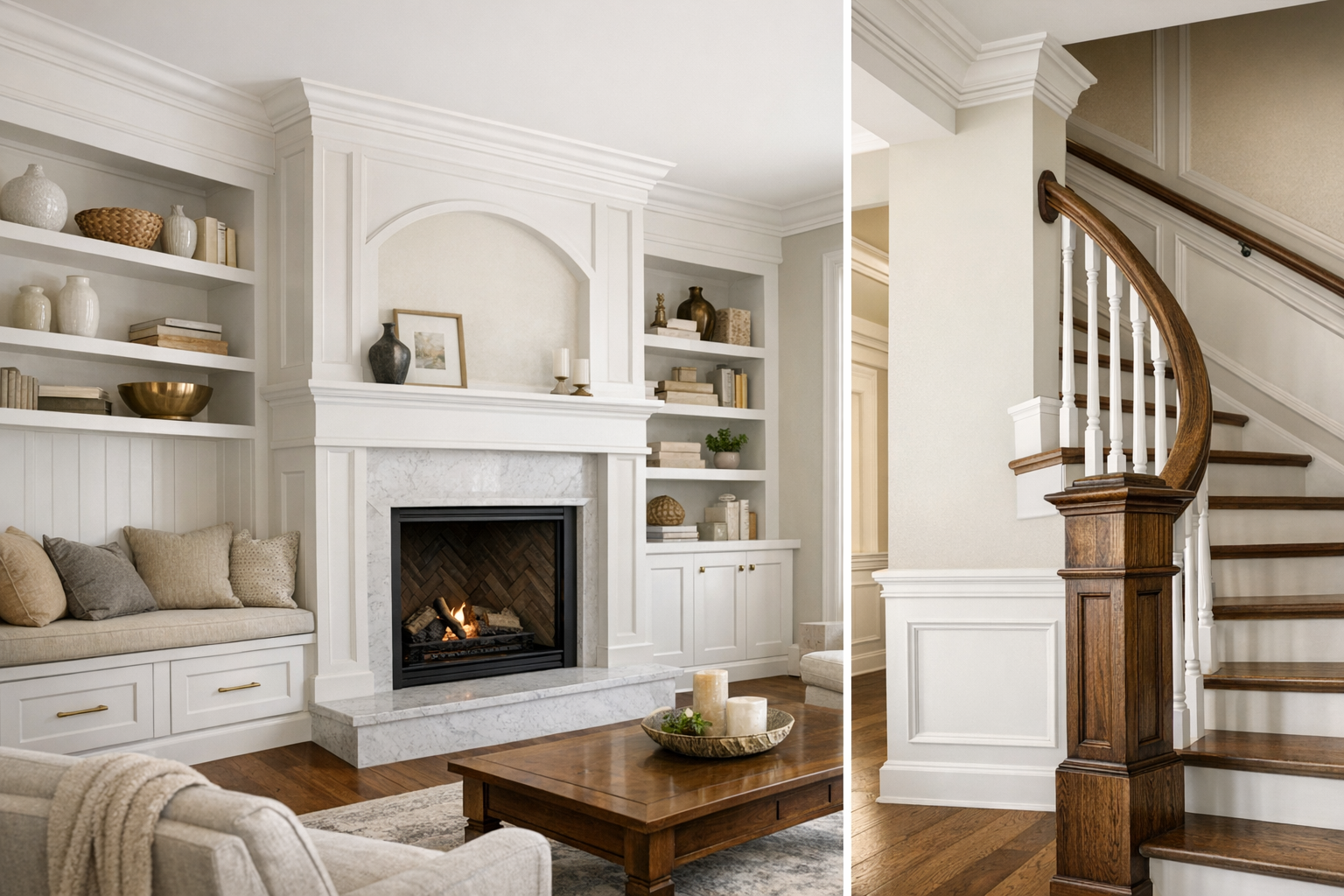
Built-ins are among the most valuable millwork features in custom homes. They maximize space while maintaining a seamless look. Whether surrounding a fireplace, lining a home office, or creating a window seat with storage, built-ins make a home feel tailored and intentional.
Ceiling Beams and Architectural Details
Exposed beams can add warmth, definition, and character, especially in open-concept homes with high ceilings. Other architectural details, such as coffered ceilings or decorative brackets, can also introduce depth and help break up large expanses of drywall.
Custom Closets and Mudroom Storage
Custom closets and mudrooms are excellent places for practical millwork. Shelving, drawers, cubbies, and hooks can be designed around real-life routines, making it easier to stay organized. These spaces benefit from smart planning because they combine daily convenience with long-term durability.
Choosing the Right Materials and Finishes
Material selection plays a big role in how millwork performs and how it looks over time. Solid wood, engineered wood, MDF, and veneer each have different advantages depending on the application. For example, MDF is often used for painted trim and panels because it offers a smooth finish and consistent quality, while solid wood may be preferred for stained cabinetry or areas that need more durability.
Finishes are equally important. Painted millwork can make a room feel crisp and refined, while stained wood highlights grain and brings warmth. Dark finishes create drama and sophistication, while lighter colors can make interiors feel brighter and more open. The best choice depends on the home’s overall palette and the atmosphere you want to create.
It is also important to consider how the millwork will age. High-traffic areas may require finishes that are easier to clean and more resistant to wear. A good design balances appearance with practicality so the millwork remains beautiful for years.
How to Integrate Millwork Into Your Design
Successful millwork should feel like a natural part of the home, not an afterthought. That starts with planning early in the design process. The proportions, style, and finish should all align with the home’s architecture, ceiling heights, and interior details.
For example, tall rooms may benefit from larger trim profiles, while smaller spaces often look better with restrained detailing. Likewise, a modern home may call for flat panels and clean lines, while a classic home may suit more layered ornamentation. Coordination is key. Millwork should work with flooring, lighting, cabinetry, and wall colors to create a unified interior.
Working with experienced designers and craftsmen can make a major difference. Custom millwork requires precision, especially when it must fit unusual layouts or match existing architectural elements. The more carefully it is planned and installed, the more seamless and high-end the result will be.
Benefits of Investing in Custom Millwork
Custom millwork offers long-term value in several ways. First, it enhances the aesthetic appeal of a home, which can make interiors feel more luxurious and memorable. Second, it improves functionality through storage and built-ins that support everyday living. Third, it often adds perceived value because buyers tend to appreciate homes with thoughtful, built-in detail.
Perhaps most importantly, millwork helps a custom home feel unique. It can reflect a homeowner’s taste, complement the architecture, and create a stronger sense of identity throughout the interior. Rather than relying on generic finishes, millwork gives a home depth and distinction.
Conclusion
Millwork is one of the defining features of custom home interiors. It adds beauty, structure, and practical function while helping each room feel complete and personalized. From subtle trim to standout built-ins, thoughtful millwork turns ordinary spaces into memorable ones. When planned well, it becomes part of the home’s architecture and a lasting expression of style.