Millwork Solutions for Office Spaces: Designing Functional, Polished Workplaces
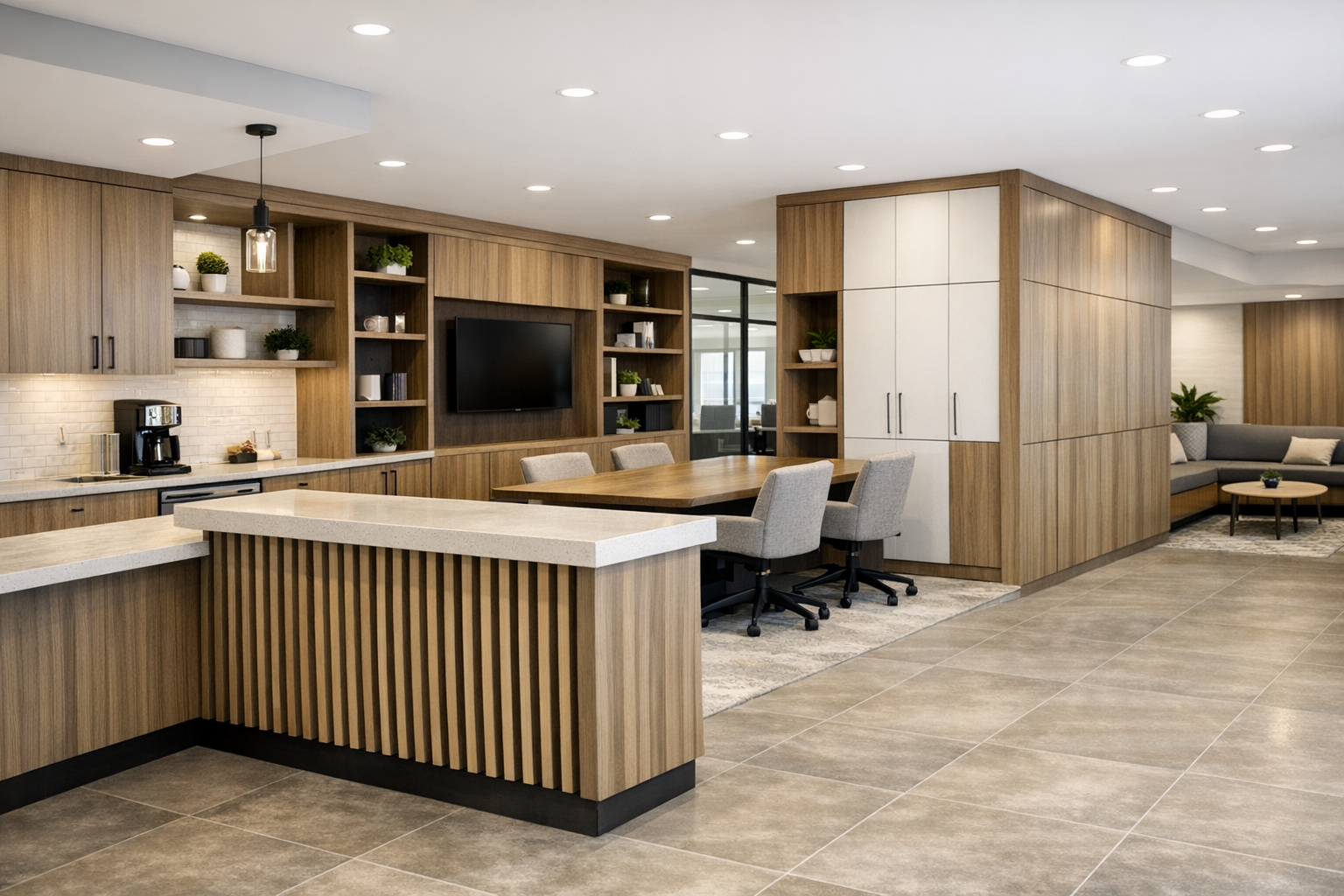
Why Millwork Matters in Office Design
Millwork plays a central role in how an office looks, feels, and functions. From reception desks and conference tables to built-in storage and breakout-area shelving, well-designed millwork can make a workspace more efficient while reinforcing a company’s brand. In modern offices, where first impressions and employee experience matter more than ever, custom millwork helps turn a basic floor plan into a polished, purpose-driven environment.
Unlike off-the-shelf furniture, millwork can be tailored to the exact dimensions, workflow, and aesthetic goals of a space. That means fewer wasted square feet, better organization, and a more cohesive design overall. For growing businesses, millwork is often the difference between a space that simply functions and one that actively supports productivity and professionalism.
Common Millwork Solutions for Office Spaces
Office millwork can be adapted to almost every area of a workplace. The right pieces depend on how the space is used, how many people work there, and what kind of image the company wants to project. Below are some of the most common and effective millwork solutions.
Reception Desks and Front-of-House Features
The reception area is often the first physical touchpoint for clients, partners, and employees. A custom reception desk can communicate brand identity instantly through materials, finishes, lighting, and shape. Beyond appearance, it should also support practical needs such as storage, cable management, visitor check-in, and accessibility.
Other front-of-house millwork options include feature walls, display shelving, built-in signage, and concierge counters. These elements help establish a strong visual identity from the moment someone enters the office.
Conference Rooms and Collaboration Areas
Conference rooms benefit greatly from millwork that supports both presentation and discussion. Built-in credenzas, media cabinets, and integrated technology storage keep equipment organized and out of sight. Custom conference tables can also be designed to accommodate power access, data ports, and comfortable seating arrangements.
In collaboration spaces, millwork can define zones without making the office feel closed off. Low storage units, banquette seating with built-in cabinetry, and wall-mounted shelves all contribute to a space that feels intentional and uncluttered.
Workstations and Open Office Storage
Open offices often need storage solutions that maintain a clean, streamlined appearance. Custom millwork can provide shared filing systems, printer stations, supply cabinets, and under-desk storage without adding visual noise. When designed well, these elements make it easier for employees to stay organized and focused.
Workstation millwork can also improve ergonomics and workflow. Integrated partitions, monitor supports, and privacy panels help create a more comfortable environment while still preserving collaboration.
Breakrooms, Kitchens, and Amenity Spaces
Employee amenity spaces have become increasingly important in office design, and millwork helps make them both functional and inviting. In breakrooms and kitchen areas, custom cabinetry, counters, islands, and pantry storage can maximize usability in compact footprints. Durable surfaces and moisture-resistant finishes are especially important in these high-traffic zones.
Well-planned millwork in amenity spaces can also support company culture. A thoughtfully designed coffee bar, snack station, or casual seating nook gives employees a place to recharge and connect, which can improve satisfaction and retention.
Built-In Storage and Filing Systems
Storage is one of the most valuable functions millwork can provide in an office. Built-in cabinets, wall units, and concealed filing systems help reduce clutter while keeping essential materials close at hand. This is especially useful in offices that need to balance aesthetics with compliance, security, or document management requirements.
Unlike freestanding storage, built-in solutions can be customized to fit awkward corners, underused walls, and narrow corridors. That flexibility makes them ideal for offices where every square foot matters.
Benefits of Custom Millwork in the Workplace
Custom millwork offers more than a beautiful finish. It can improve how an office operates on a daily basis and contribute to a better overall experience for everyone who uses the space.
One major advantage is space efficiency. Because millwork is designed for a specific layout, it can make the most of available square footage and eliminate dead space. This is particularly valuable in urban offices or companies working within leased footprints.
Another benefit is brand consistency. Materials, colors, and detailing can be selected to reflect the company’s personality and values. Whether the goal is sleek and modern, warm and welcoming, or bold and innovative, millwork helps carry that vision throughout the workplace.
Durability is also a key factor. High-quality millwork is built to withstand daily use, making it a smart long-term investment. It can reduce the need for frequent replacements and support a more sustainable approach to office furnishing.
Finally, custom millwork improves user experience. Employees and visitors alike benefit from environments that feel organized, intuitive, and professionally designed. That can translate into better morale, stronger impressions, and a more productive work setting overall.
Choosing the Right Materials and Finishes
The success of an office millwork project depends heavily on material selection. Surfaces should not only look good but also stand up to daily wear. Popular choices include laminate, veneer, solid surface materials, thermally fused melamine, and select hardwoods. Each option offers a different balance of cost, appearance, and durability.
Finishes should align with both the brand and the demands of the space. Matte finishes can create a refined, contemporary look, while textured wood grains can add warmth and depth. In high-use areas, stain-resistant and easy-to-clean finishes are worth prioritizing.
It is also important to think about acoustics, lighting, and maintenance. For example, some millwork surfaces can help soften sound in open offices, while lighter finishes can make compact spaces feel larger and brighter. A well-rounded design approach ensures the millwork performs as beautifully as it looks.
Working with a Millwork Professional
Because office millwork must balance design, function, and budget, working with an experienced professional is essential. A skilled millwork partner can help translate business needs into a practical plan, coordinate with architects and contractors, and ensure the final result fits the space precisely.
During the planning phase, it helps to consider circulation, technology integration, storage needs, accessibility, and future flexibility. The best millwork solutions are those that support current operations while allowing room for growth. Clear communication and detailed drawings also help avoid costly changes later in the process.
Conclusion
Millwork solutions for office spaces do far more than fill a room. They shape how people experience the workplace, support daily productivity, and reinforce a company’s identity. Whether you are updating a reception area, adding built-in storage, or redesigning an entire office, custom millwork can bring lasting value to the space. With the right planning and execution, it becomes one of the most effective investments in a modern workplace.