A Complete Guide to Office Tenant Improvement Services
What Are Office Tenant Improvement Services?
Office tenant improvement services refer to the design, construction, and renovation work done to customize a leased office space for a specific business. These services help transform a standard commercial unit into a workspace that supports your team’s needs, brand identity, and daily operations. Whether you are moving into a new suite or updating an existing one, tenant improvements can make the space more functional, comfortable, and efficient.
In many cases, tenant improvements are also called “TI” or “tenant build-outs.” The scope can be as simple as new paint and flooring or as extensive as full interior demolition, reconfiguration of walls, upgraded lighting, plumbing changes, and technology integration. The goal is to create an office environment that works for your business, not just a generic floor plan.
Why Tenant Improvements Matter
A well-planned office has a direct impact on productivity, morale, and how clients view your business. Tenant improvement services allow you to tailor the layout to the way your team actually works. That could mean creating private offices, open collaboration areas, conference rooms, break spaces, reception areas, or specialized rooms for training and support.
These improvements also support long-term business goals. A smart build-out can improve traffic flow, help employees work more efficiently, and make better use of the square footage you are paying for. In competitive markets, a polished office space can also strengthen your company image and help attract top talent.
What Is Included in Office Tenant Improvement Services?
Tenant improvement projects vary widely, but most include several core services that work together to prepare the space for occupancy.
Space Planning and Design
The process usually begins with space planning. This step focuses on how the office should function and how each area will be used. Designers and contractors work with you to map out an efficient layout that balances privacy, collaboration, storage, and workflow.
Demolition and Build-Out
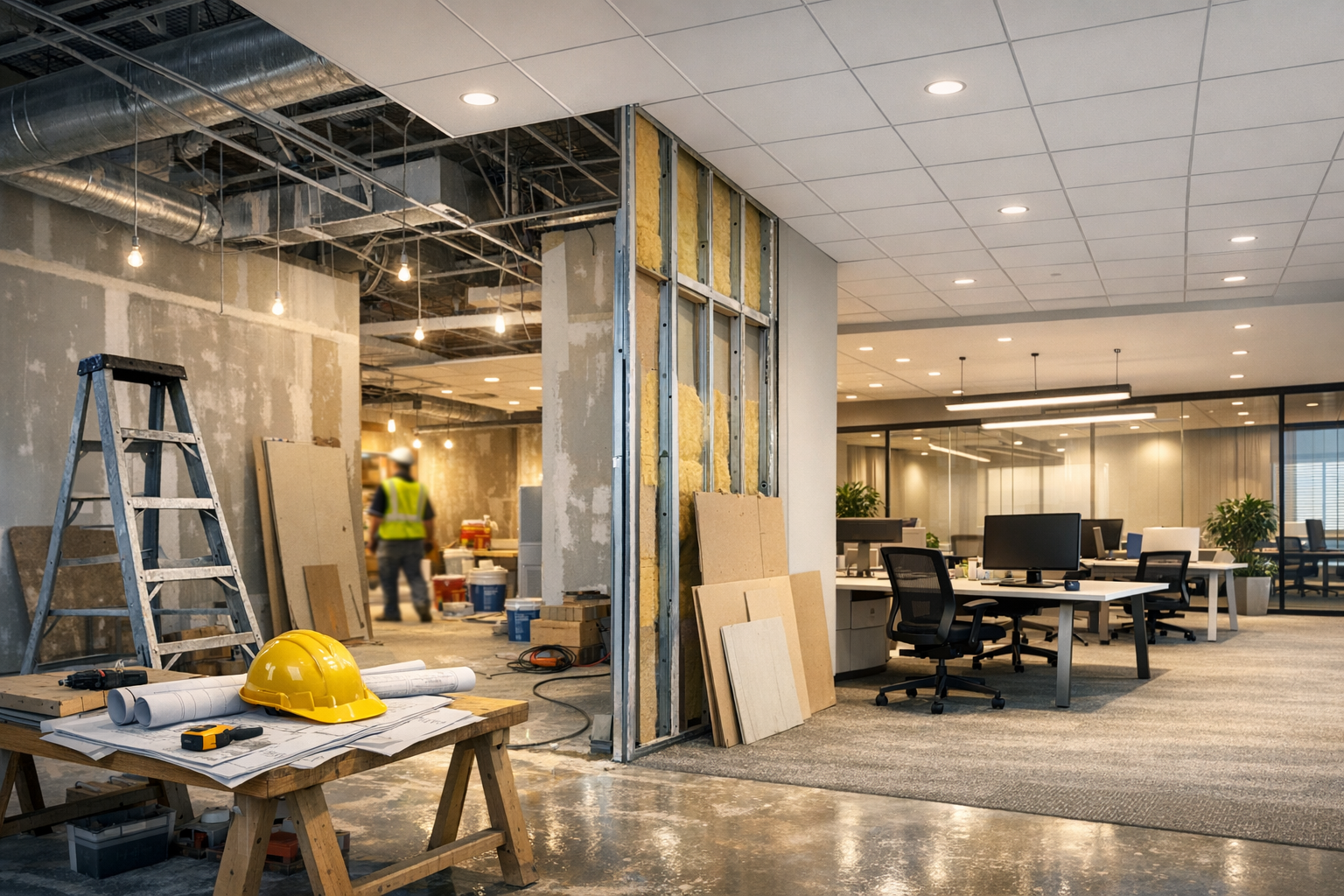
If the space needs to be reconfigured, demolition may be necessary. This can include removing old partitions, finishes, fixtures, or outdated systems. After demolition, the build-out begins, which may involve framing new walls, installing doors, and creating dedicated rooms or work zones.
Mechanical, Electrical, and Plumbing Work
Many office improvements require updates to essential systems. This may include electrical rewiring for workstations and equipment, added lighting, HVAC adjustments, and plumbing for kitchens, restrooms, or break rooms. These elements must be carefully coordinated to meet building codes and support day-to-day operations.
Finishes and Fixtures
Once the structural work is complete, finishing touches bring the office to life. This can include flooring, ceiling systems, paint, trim, millwork, acoustic treatments, and custom fixtures. The right finishes help create a professional appearance while improving comfort and usability.
Technology Integration
Modern offices depend on strong connectivity and reliable tech infrastructure. Tenant improvement services often include data cabling, server room setup, security systems, access control, and audiovisual components for meeting rooms and conference spaces.
Benefits of Hiring Professional Tenant Improvement Contractors
Working with experienced tenant improvement contractors offers several advantages. First, professionals understand how to manage the complexity of commercial renovations. They coordinate trades, schedules, permits, inspections, and building requirements so the project moves forward smoothly.
Second, professional contractors help control costs and avoid delays. They can identify potential issues early, recommend practical materials, and keep the project aligned with your budget. Their experience also helps reduce mistakes that can lead to rework or compliance problems.
Third, contractors with office renovation experience can help you make strategic design choices. They know how to maximize space, improve function, and deliver a polished result that reflects your brand. Instead of piecing together separate vendors, you get a coordinated process from concept to completion.
How the Tenant Improvement Process Works
Although every project is different, most office tenant improvement services follow a similar sequence.
1. Initial Consultation
The process starts with a conversation about your goals, budget, timeline, and space requirements. This stage helps define what the office needs to accomplish and which improvements will provide the most value.
2. Design and Planning
Next, the team develops a layout and detailed plans for the build-out. This may include floor plans, finish selections, system upgrades, and permit drawings. Good planning at this stage helps prevent costly changes later.
3. Permitting and Approvals
Depending on the scope of work, permits and building approvals may be required. A qualified contractor can help navigate local codes, landlord requirements, and inspection processes.
4. Construction
Once approvals are in place, construction begins. This phase includes demolition, framing, mechanical work, finishes, and installation of fixtures and technology. Regular communication during construction keeps the project on track and helps address any issues quickly.
5. Final Walkthrough and Completion
After construction is complete, the contractor performs a final walkthrough to confirm that everything meets expectations. Any remaining punch-list items are completed, and the space is ready for your team to move in.
Factors That Affect Tenant Improvement Costs
The cost of office tenant improvement services depends on several factors. The size of the space is an obvious one, but the complexity of the work matters just as much. A simple refresh with new finishes will cost less than a full redesign with major electrical, plumbing, and HVAC changes.
Other factors include material selections, permit requirements, labor availability, and whether the building has special rules or access limitations. The age and condition of the existing office can also affect pricing, especially if hidden issues are discovered during demolition. Because of these variables, it is best to request a detailed estimate early in the process.
How to Choose the Right Tenant Improvement Partner
Choosing the right contractor can make the difference between a smooth project and a frustrating one. Look for a company with experience in commercial office renovations and a strong understanding of tenant improvement projects. Ask for examples of similar work, references, and a clear explanation of their process.
It is also important to choose a partner who communicates well and provides transparent pricing. The best contractors collaborate closely with property managers, designers, and business owners to make sure expectations are aligned from the beginning. A reliable team will focus on both quality and efficiency, helping you get the most from your investment.
Conclusion
Office tenant improvement services play an essential role in creating a workplace that supports your business goals. From planning and design to construction and finishing details, these services help turn an ordinary leased space into a functional, attractive office that works for your team. With the right contractor and a clear plan, you can create a space that improves productivity, reflects your brand, and sets your business up for success.