What Are Commercial Design-Build Services and Why Do They Matter?
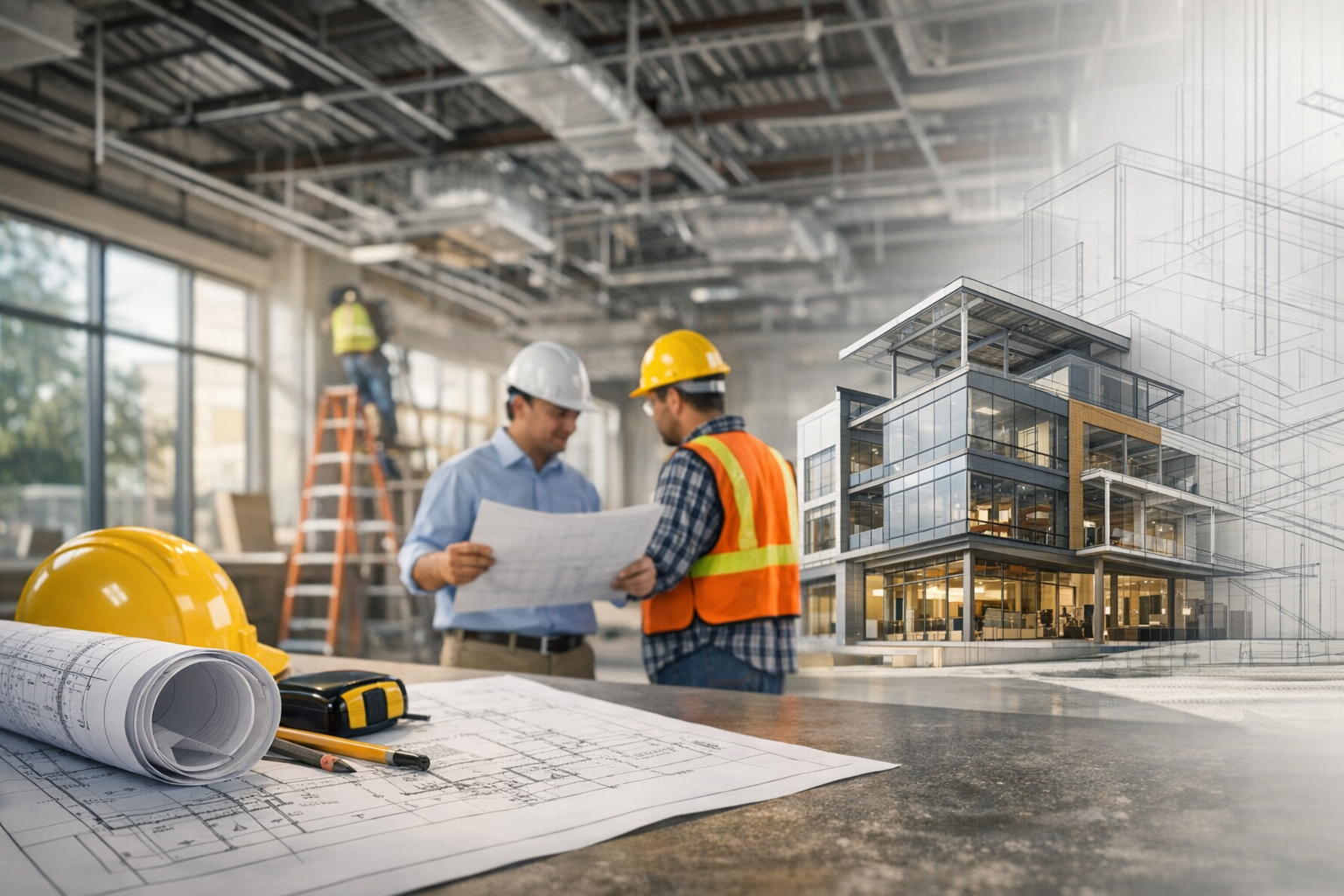
Commercial construction projects are often complex, with many moving parts, tight timelines, and a need for careful coordination. That is where commercial design-build services come in. This project delivery method brings design and construction under one roof, helping businesses move from concept to completion with greater efficiency, clearer communication, and fewer surprises.
Whether you are planning an office renovation, retail build-out, healthcare space, or a new commercial facility, understanding how design-build works can help you make smarter decisions. Below, we break down what commercial design-build services are, how they compare to traditional delivery methods, and why so many property owners and developers prefer them.
What Are Commercial Design-Build Services?
Commercial design-build services are a project delivery approach in which one team handles both the design and construction phases of a project. Instead of hiring a separate architect or designer and then selecting a contractor later, the client works with a single entity responsible for the entire process.
In a design-build model, the team typically includes architects, designers, engineers, and builders working collaboratively from the start. This integrated approach allows project goals, budgets, and timelines to be considered together, rather than in isolated stages.
For commercial property owners, this can mean fewer handoffs, fewer misunderstandings, and a more streamlined path from the initial idea to the finished space.
How the Commercial Design-Build Process Works
The design-build process is built around collaboration. While every project is different, most commercial design-build services follow a similar path:
1. Initial Consultation and Goal Setting
The process begins with a discussion about the client’s needs, business objectives, budget, site conditions, and schedule. This early planning stage helps define the project scope and identify potential challenges before work begins.
2. Conceptual Design and Planning
Next, the design team develops preliminary concepts based on the client’s goals. This may include layout options, finish selections, space planning, code considerations, and high-level cost estimates. Because construction professionals are involved early, the design can be evaluated for practicality and cost efficiency right away.
3. Budget Development and Value Engineering
One of the biggest advantages of design-build is the ability to align the design with the budget as the project develops. If certain features are too costly, the team can suggest alternative materials or construction methods that preserve the project’s goals while controlling costs.
4. Construction Documents and Permitting
Once the design is refined, detailed construction documents are prepared for permitting and execution. Because the same team is coordinating both design and construction, this phase often moves more smoothly than it does in traditional project delivery models.
5. Construction and Project Delivery
With plans approved, construction begins. The design-build team manages scheduling, subcontractors, materials, inspections, and communication throughout the build. If questions arise in the field, decisions can be made faster because the design and construction teams are already aligned.
Benefits of Commercial Design-Build Services
Commercial design-build services offer several advantages that make them an appealing option for business owners, developers, and property managers.
Single Point of Contact
One of the most practical benefits is having a single team responsible for both design and construction. This simplifies communication and reduces the confusion that can occur when multiple firms are involved.
Faster Project Delivery
Because design and construction overlap more efficiently in a design-build model, projects often move faster. Early contractor involvement helps identify potential issues before they cause delays, and decisions can be made without waiting for multiple parties to coordinate separately.
Better Budget Control
Commercial design-build services make it easier to track costs throughout the project. Since builders are involved during the design phase, the team can estimate costs more accurately and adjust plans before expenses get out of hand.
Improved Collaboration
Design-build encourages teamwork from day one. Designers and builders solve problems together, which often leads to more practical solutions, fewer conflicts, and better overall project outcomes.
Reduced Risk of Change Orders
In traditional construction delivery, changes often happen when the design does not fully account for real-world construction conditions. With a design-build team working together from the beginning, many of these issues can be anticipated and addressed before they become costly change orders.
Design-Build vs. Traditional Design-Bid-Build
To understand the value of commercial design-build services, it helps to compare them with the traditional design-bid-build method.
In design-bid-build, the owner hires a designer to create plans, then sends those plans out for contractor bids. The lowest qualified bid often wins the job, and construction begins after the contract is awarded.
While this method can work well for some projects, it separates design and construction into distinct phases. That separation can lead to communication gaps, slower timelines, and higher chances of cost overruns if the design does not align with the construction budget.
By contrast, design-build keeps the project team integrated throughout the process. That collaboration often leads to a smoother workflow and more predictable results, especially for complex commercial projects where timing and budget matter.
When to Consider Commercial Design-Build Services
Commercial design-build services are a strong fit for many types of projects, including tenant improvements, office renovations, hospitality spaces, medical offices, retail stores, warehouses, and new commercial builds. They are especially helpful when:
- You want to complete a project quickly
- You need tighter control over budget and scope
- You prefer streamlined communication
- Your project has complex scheduling or technical requirements
- You want a more collaborative and efficient process
Businesses that are expanding, rebranding, relocating, or updating aging facilities often benefit from the flexibility and accountability that design-build provides.
How to Choose the Right Commercial Design-Build Partner
Selecting the right team is critical to project success. Look for a commercial design-build firm with experience in your type of project, a strong portfolio, and a clear process for communication and project management.
Ask about past work, scheduling methods, cost controls, and how they handle permitting and field coordination. A reliable partner should be transparent, responsive, and able to explain how they will keep your project aligned with your goals.
It is also important to choose a team that understands your industry. A design-build firm that has worked on similar commercial spaces will be better prepared to address code requirements, operational needs, and long-term functionality.
Conclusion
Commercial design-build services offer a more integrated and efficient way to complete construction projects. By combining design and construction into one collaborative process, businesses can benefit from faster delivery, better budget management, and fewer project headaches. If you are planning a commercial build or renovation, design-build may be the smartest path forward.